

The song tells the story of John Barleycorn, a personification of the barley harvest. He is planted in the earth, grows to maturity, is cut down, beaten, and ultimately transformed into beer and whiskey. It's a tale of death and resurrection, but also a celebration of the agricultural cycle and the transformation of grain into drink. Beneath its darkly humorous narrative lies an older understanding of the relationship between human beings, the land, and the changing seasons.
An Old Ballad and the Cycle of the Seasons
The story of John Barleycorn is older than the recordings most of us know. The character of John Barleycorn appears in an English broadside printed in 1624, titled A Pleasant New Ballad to Sing Both Evening and Morn, of the Bloody Murder of Sir John Barleycorn.
Over the centuries, the ballad evolved through oral tradition, with different verses, melodies, and regional variations. Robert Burns published his own version in the late eighteenth century, helping to preserve the song for subsequent generations.
The imagery is colorful and vivid. Three men vow that John Barleycorn must die. They plow him under, cover him with earth, wait for him to grow, and then cut him down. He is beaten, ground between millstones, and finally transformed into the drink that brings pleasure and merriment to those who consume it.
The symbolism is clear. Barley must die in order to live again in another form. The song celebrates the harvest while acknowledging the necessary destruction that makes renewal possible.
Steve Winwood and Traffic: A Remarkable Rediscovery
For many people of my generation, the song became familiar through the extraordinary recording by Traffic on their 1970 album, John Barleycorn Must Die. (As a teenager I bought that album and played it over and over again. With so many repetitions, I think the music must have worked its way deep into my mind.)
Winwood's arrangement takes an old English folk ballad and gives it a haunting, almost hypnotic atmosphere. It is earthy and intimate, yet unmistakably contemporary. Winwood's interpretation introduced the song to a new generation of listeners and helped make it one of the most memorable recordings of the early-1970s folk-rock era.
Of course, Traffic didn't write the song. It's a traditional ballad, and Steve Winwood's contribution was to find a new musical setting for an old and remarkable piece of storytelling.
Bringing John Barleycorn to the Lute
My own connection with John Barleycorn comes from my love of traditional music and the possibilities of bringing older musical traditions into a new setting.
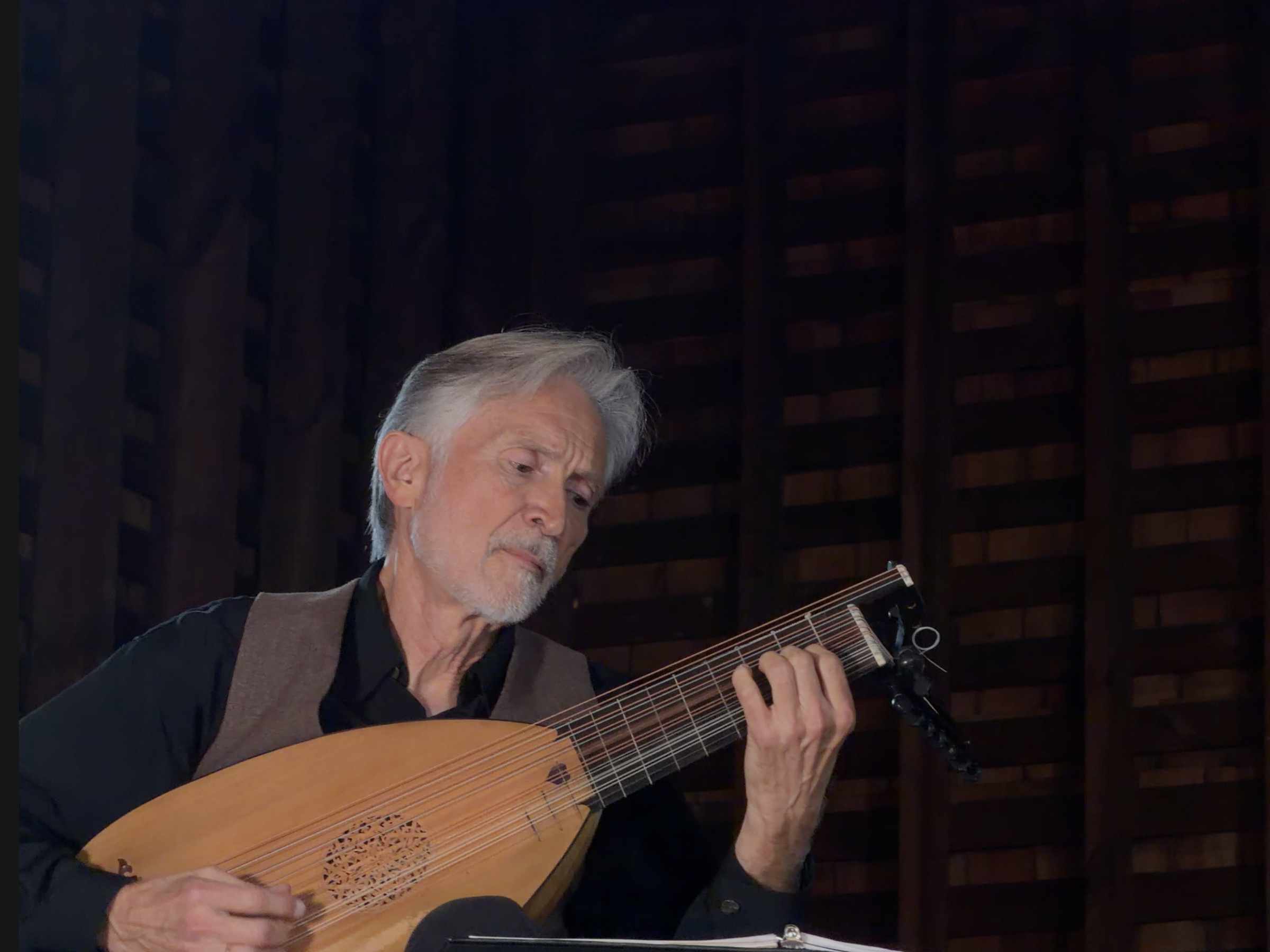
The lute has its own deep connection with the popular music of earlier centuries. Renaissance lutenists frequently borrowed melodies from popular songs and dances, adapting them for the instrument and making them their own. Transcribing John Barleycorn for lute continues that tradition. The lute can carry a melody while providing its own harmony and bass, and it has a way of bringing an intimate, almost personal quality to music. Carolyn Surrick and I also made an arrangement of John Barleycorn for viola da gamba and lute, which is featured on our Fermi’s Paradox recording.
John Barleycorn and Ayreheart
I wanted to bring the song to Ayreheart. The band moves comfortably between Renaissance music, traditional folk, and original compositions, so John Barleycorn seemed like a natural fit.
There is something satisfying about playing a song with such a long history in a group that draws on both early music and contemporary folk traditions. It reminds me that the boundaries between these musical worlds are less distinct than we imagine.
When I think about the journey of John Barleycorn, I'm struck by how many different musical lives it has had. It began as a traditional ballad, passed through generations of singers, was brought to a new audience by Steve Winwood and Traffic, and eventually found its way into my own arrangements for solo lute and Ayreheart.
That's one of the things I love about traditional music. These songs don't really belong to any particular time or place. They're there for the taking, waiting for someone to discover them and give them another life.
John Barleycorn may have to die every year, but the song itself seems to have an endless capacity for renewal.
~Ronn


